
 admin45673
Pumpkins are more than just a symbol of fall or Halloween decorations, they are versatile fruits with fascinating diversity. From their shapes and sizes to their colors and textures, each pumpkin variety tells a unique story. Understanding the range of pumpkin varieties and their color traits can help gardeners, cooks, and enthusiasts choose the perfect pumpkin for their needs. From my own personal experience, exploring pumpkin varieties is like discovering a rainbow in the garden, each one bringing its unique charm and culinary use.
Let’s Understand Pumpkin Varieties Here
Pumpkins belong to the genus Cucurbita, which includes several species such as Cucurbita pepo, Cucurbita maxima, Cucurbita moschata, and Cucurbita argyrosperma. Each species hosts a wide range of varieties, and color plays a significant role in identifying them. While most people associate pumpkins with the classic bright orange color, their hues can range from deep green to creamy white, yellow, blue, and even purple.
Factors Affecting Pumpkin Color
The color of a pumpkin is influenced by genetics, ripeness, and growing conditions. Pigments such as carotenoids produce the familiar orange, while chlorophyll gives green tones, and anthocyanins result in shades of purple or blue. Additionally, environmental factors such as sunlight, soil type, and temperature can subtly alter the final hue of a pumpkin.
Popular Pumpkin Varieties and Their Color Traits
Here is a comprehensive guide to some of the most notable pumpkin varieties, focusing on their color traits, culinary use, and growing preferences.
Classic Orange Pumpkins
1. Sugar Pie Pumpkin (Cucurbita pepo)
Sugar Pie pumpkins are the quintessential baking pumpkins. They are small to medium in size, round, and deep orange. Their sweet, dense flesh is perfect for pies, soups, and purees. From my own personal experience, these pumpkins have the richest flavor when harvested at peak ripeness, which intensifies the orange hue.
2. Jack-o’-Lantern Pumpkin (Cucurbita pepo)
Famous for Halloween carvings, this pumpkin has a bright, vivid orange skin. While the flesh is not as sweet as Sugar Pie pumpkins, it holds up well for decoration and mild cooking purposes. The uniformity in its color makes it ideal for visual appeal, especially in festive displays.
3. Cinderella Pumpkin (Cucurbita maxima)
Also known as Rouge Vif d’Etampes, these pumpkins are flatter with deep ribbing. Their color is a striking reddish-orange, reminiscent of a fairy-tale carriage. They can be used for both decoration and cooking, producing a slightly sweet and creamy flesh.
White and Creamy Pumpkins
4. Lumina Pumpkin (Cucurbita pepo)
Lumina pumpkins are round with smooth, creamy-white skin. They are often used for decorative purposes, offering a clean contrast against traditional orange pumpkins. Their flesh is pale yellow and mildly sweet, suitable for soups and baked goods.
5. Casper Pumpkin (Cucurbita pepo)
Casper pumpkins are pure white and slightly flattened. They are ideal for Halloween or autumn decor due to their ghostly appearance. While their taste is mild, they are excellent for roasting or pureeing for a unique visual in dishes.
6. Snowball Pumpkin (Cucurbita maxima)
These pumpkins are white, round, and moderately large. Snowball pumpkins are edible with a dense, sweet flesh, making them a versatile choice for both décor and culinary use.
Blue and Gray Pumpkins
7. Jarrahdale Pumpkin (Cucurbita maxima)
Originating from Australia, the Jarrahdale pumpkin has slate-blue skin and a flattened, ribbed shape. Its flesh is deep yellow-orange, rich, and sweet. From my own personal experience, the blue-gray exterior adds elegance to autumn displays, while the flesh is perfect for pies and soups.
8. Blue Ballet Pumpkin (Cucurbita maxima)
This variety features smooth, powdery blue skin with thick, bright orange flesh. The contrast between skin and flesh makes it visually stunning and ideal for culinary purposes.
9. Queensland Blue Pumpkin (Cucurbita maxima)
Queensland Blue pumpkins have a dark blue, slightly rough exterior and dense orange flesh. They are larger than other blue pumpkins and are great for baking, roasting, and soups.
Green and Multi-Colored Pumpkins
10. Kabocha Pumpkin (Cucurbita maxima)
Kabocha pumpkins are dark green with subtle mottling and a squat shape. Their bright yellow-orange flesh is sweet and smooth, often used in Japanese cuisine. From my own personal experience, the green exterior makes it easy to store in pantries while keeping the flesh fresh.
11. Carnival Pumpkin (Cucurbita pepo)
Carnival pumpkins are small to medium with a striking mix of green, orange, and cream stripes. Their multicolored appearance makes them excellent for decorations, and their dense flesh works well in baking and cooking.
12. Sweet Dumpling Pumpkin (Cucurbita pepo)
Sweet Dumpling pumpkins are tiny and round with creamy white skin accented by green stripes. Despite their small size, they have sweet, nutty flesh ideal for roasting or stuffing.
Unusual and Rare Color Varieties
13. Pink Banana Pumpkin (Cucurbita maxima)
These oblong pumpkins have a light pink to salmon hue and smooth skin. They are excellent for decorative purposes and culinary use due to their sweet, creamy flesh.
14. Rouge Vif d’Etampes (Cinderella Variant) (Cucurbita maxima)
While a variation of the Cinderella pumpkin, this version leans toward a darker red-orange with a slightly flattened shape. Its flesh is rich and sweet, perfect for autumn pies and soups.
15. Ghost Rider Pumpkin (Cucurbita pepo)
Ghost Rider pumpkins have pale gray skin with hints of green and white streaks. Their mild flesh is suitable for cooking, and the unusual color makes them stand out in autumn displays.
16. Fairytale Pumpkin (Cucurbita maxima)
Fairytale pumpkins have a muted tan or light brown color with deep ribbing. Their orange flesh is dense and sweet, making them versatile for baking and soups. They are ideal for decorative use when aiming for a more natural, earthy fall palette.
Specialty Culinary Pumpkins
17. Musquee de Provence (Cucurbita moschata)
These pumpkins are deeply ribbed and russet-orange. They are large and produce dense, flavorful flesh perfect for soups, pies, and roasted dishes. From my own personal experience, this pumpkin is unmatched for its creamy texture in purees.
18. Long Island Cheese Pumpkin (Cucurbita moschata)
Named for its flattened, round shape resembling a wheel of cheese, this pumpkin is pale tan on the outside with deep orange, sweet flesh. It is excellent for baking, especially pies, due to its creamy consistency.
19. Baby Pam Pumpkin (Cucurbita pepo)
A miniature pumpkin variety with bright orange skin and tender flesh. Baby Pam pumpkins are often used for decorations or small servings in recipes.
20. Muscat de Provence (Cucurbita maxima)
Muscat de Provence pumpkins have mottled green and brown skin with rich orange flesh. They are sweet and nutty, ideal for roasting, soups, and autumn meals.
pumpkin varieties and their color traits…
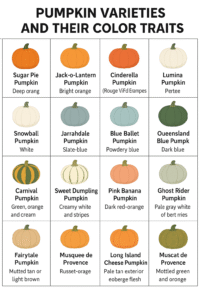
Here’s a clean, non-repetitive list of the 20 pumpkin varieties with their color traits:
- Sugar Pie Pumpkin – Deep orange
- Jack-o’-Lantern Pumpkin – Bright orange
- Cinderella Pumpkin (Rouge Vif d’Etampes) – Reddish-orange
- Lumina Pumpkin – Creamy white
- Casper Pumpkin – Pure white
- Snowball Pumpkin – White
- Jarrahdale Pumpkin – Slate-blue
- Blue Ballet Pumpkin – Powdery blue
- Queensland Blue Pumpkin – Dark blue
- Kabocha Pumpkin – Dark green with yellow-orange flesh
- Carnival Pumpkin – Green, orange, and cream stripes
- Sweet Dumpling Pumpkin – Creamy white with green stripes
- Pink Banana Pumpkin – Light pink to salmon
- Rouge Vif d’Etampes (Cinderella variant) – Dark red-orange
- Ghost Rider Pumpkin – Pale gray with hints of green and white streaks
- Fairytale Pumpkin – Muted tan or light brown
- Musquee de Provence – Russet-orange
- Long Island Cheese Pumpkin – Pale tan exterior with deep orange flesh
- Baby Pam Pumpkin – Bright orange
- Muscat de Provence – Mottled green and brown with rich orange flesh
Here’s a simple, clear chart table listing the pumpkin varieties and their color traits.
| # | Pumpkin Variety | Color Trait |
|---|---|---|
| 1 | Sugar Pie Pumpkin | Deep orange |
| 2 | Jack-o’-Lantern Pumpkin | Bright orange |
| 3 | Cinderella Pumpkin (Rouge Vif d’Etampes) | Reddish-orange |
| 4 | Lumina Pumpkin | Creamy white |
| 5 | Casper Pumpkin | Pure white |
| 6 | Snowball Pumpkin | White |
| 7 | Jarrahdale Pumpkin | Slate-blue |
| 8 | Blue Ballet Pumpkin | Powdery blue |
| 9 | Queensland Blue Pumpkin | Dark blue |
| 10 | Kabocha Pumpkin | Dark green with yellow-orange flesh |
| 11 | Carnival Pumpkin | Green, orange, and cream stripes |
| 12 | Sweet Dumpling Pumpkin | Creamy white with green stripes |
| 13 | Pink Banana Pumpkin | Light pink to salmon |
| 14 | Rouge Vif d’Etampes (Cinderella variant) | Dark red-orange |
| 15 | Ghost Rider Pumpkin | Pale gray with hints of green and white |
| 16 | Fairytale Pumpkin | Muted tan or light brown |
| 17 | Musquee de Provence | Russet-orange |
| 18 | Long Island Cheese Pumpkin | Pale tan exterior with deep orange flesh |
| 19 | Baby Pam Pumpkin | Bright orange |
| 20 | Muscat de Provence | Mottled green and brown with rich orange flesh |
Choosing Pumpkins Based on Color Traits
When selecting pumpkins, consider the intended purpose.
For Culinary Use
Bright orange and deep yellow flesh pumpkins like Sugar Pie, Musquee de Provence, and Kabocha are ideal. Their color often signals sweetness and richness in flavor. Dense flesh varieties such as Long Island Cheese and Jarrahdale are excellent for pies and soups.
For Decorative Purposes
White, blue, and multicolored pumpkins such as Lumina, Blue Ballet, Carnival, and Sweet Dumpling are visually striking. They bring variety to autumn displays, centerpieces, and Halloween décor. From my own personal experience, combining different colors in a single arrangement enhances aesthetic appeal dramatically.
For Storage and Longevity
Green and gray pumpkins like Kabocha, Ghost Rider, and Queensland Blue tend to store longer due to their thick rinds and slower ripening. They maintain their color and texture for weeks when kept in cool, dry conditions.
Tips for Growing Pumpkins with Desired Colors
- Choose seeds based on species and variety. Carotenoid-rich varieties produce vibrant orange, while anthocyanin-rich types yield blues or purples.
- Ensure pumpkins receive full sunlight and nutrient-rich soil. Consistent watering prevents uneven coloring or pale patches.
- Monitor harvesting times. Pumpkins left too long may lose vibrancy, while early-picked pumpkins may not develop full color.
- Rotate planting areas yearly to maintain soil health and vibrant coloration.
Conclusion
Pumpkin varieties are incredibly diverse, offering an impressive spectrum of colors from deep orange to pale white, blue, and multicolor blends. Each variety has unique culinary applications, decorative uses, and growing needs. From my own personal experience, exploring pumpkins based on their color traits opens up opportunities to enjoy them beyond just seasonal decoration. Whether aiming to bake a delicious pumpkin pie, craft a colorful autumn centerpiece, or store pumpkins for long-term use, understanding their colors and characteristics is essential.
Pumpkin color is more than aesthetics—it’s a signal of flavor, texture, and culinary potential. By selecting varieties with intention, gardens and kitchens can enjoy the full spectrum of pumpkin diversity every season.






